The Truth About Recovery: It Takes Courage

Updated: Aug 20, 2025
Untangling the knots of shame, regret, and pain to discover true recovery through the RETURN Method of self-discovery
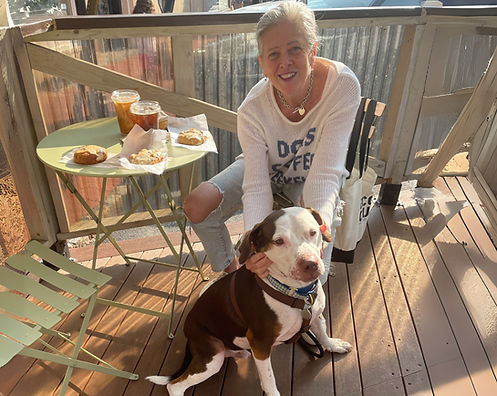
“You’re so brave.” I hear that often when I share my story of alcoholism and recovery. But for years, I never thought of myself that way.
I worked at changing the thoughts and beliefs that had led me to take refuge in alcohol, and that work brought me to a better life. To me, moving forward emotionally and spiritually was worth it.
But after working with women in early recovery, I’ve come to see something I didn’t realize at first: for many, this work feels terrifying. There’s a reason only about 10% of alcoholics make it into long-term recovery. Inner work can feel like standing in a burning house with no way out.
And here’s the thing: less than half a percent of our population are firemen. Not everyone is willing—or able—to run into the flames. But that’s how I see my role today. I know the pain of the fire because I walked through it myself. And now, like a fireman, I go back in, take women by the hand, and guide them out.
The Knot I Couldn’t Untie
So what does that inner work actually look like?

Not long ago, I pulled a tangled mess of old blind cords out from behind a curtain where I had hidden them to keep my kitten safe. In one hand I held the ball of tangled cord; with the other, I started loosening one strand at a time. Slowly, patiently, the wad began to loosen until, after a few minutes, the cords swung freely—unbound and untangled.
That was me five years ago when I first got sober. My life was one big knot that I had no idea how to untangle.
At the time, my drinking was extreme—nearly half a gallon of vodka a day. My life had grown very small. The sun hitting my face in the morning didn’t bring joy; it brought dread. I didn’t want to get out of bed. Life felt heavy, futile, something to be endured. Toward the end, I kept a bottle of vodka under the bed so I could take a few swigs just to stop shaking and numb myself enough to move through the day.
I’d walk my sweet dog, Paisley, in a stupor—staring at my feet so I wouldn’t trip, numb to everything around me. And underneath it all, one looping thought haunted me: I don’t care.
Stuck in Sobriety
When I finally put down the bottle, I thought that would be enough. For years, stopping had seemed like the hardest part. But in sobriety, I discovered a harder truth: the problem wasn’t stopping—it was staying stopped.
I thought I’d never escape the pain of regret and loss: the beautiful home Barry and I had to leave behind, the children I never had because of my therapy abuse, the self-blame I carried like a stone strapped to my back.
I remember my sponsor saying bluntly, “Karen, you have to move on!”
She was right. My therapy abuse had already driven me into full-blown alcoholism. It cost me my work, my financial security, nearly my marriage—and almost my life. And now, in recovery, it was threatening my emotional sobriety. It wasn’t sustainable.
It was time to stop ruminating and start loosening the knot.
The Shift
So I rolled up my sleeves and got honest—first with others, but especially with myself. I questioned my own part in the events of my life. I stopped living only as the victim of what had happened to me and started witnessing my role in my own story.
That shift—from victim to witness—was everything. A veil of shame and pain lifted, and for the first time, I could breathe.
The Knots I Carried
When I looked closely, I realized the hardest knots weren’t the events themselves, but the beliefs I had tied around them:
Because of childhood abuse, I believed I was valueless, unlovable, and deserving of punishment.
I believed life just “happened to me,” leaving me at the mercy of circumstances.
But here’s the truth: life doesn’t get better—you get better at life. That realization was freeing. It put me back in charge—not of events (because life still happens), but of my thoughts, my actions, and my choices. That’s empowerment.
How I Untangled My Knots
People often ask me, “How did you do it?”
This is where my RETURN Method was born. It’s a softer way through the hard inner work that so many are afraid of. Instead of hunting for “character defects” and beating yourself up, RETURN takes one strand of the knot at a time:
What happened, and by whom?
What thought did I attach to it? (I’m unlovable. I’m bad. I deserve punishment.)
What did I want that I didn’t get?
How did I try to get it?
For example: If I wanted my mother’s love and didn’t get it, I learned to put on a mask—the quiet, perfect “good girl.” I stuffed my feelings down, and eventually, I used alcohol to numb them completely.
The pain wasn’t caused only by the event itself. It was caused by the belief I attached to it. And when I questioned those beliefs, the knots began to loosen.
That’s the work. That’s how I did it.
Why I’m Here
For a long time, I shrugged off the word brave. I thought, what choice did I have?
But now I understand: for many, this work feels terrifying. And if you stay stuck—on the other side of the flames—you’ll either relapse or live in a dull, joyless pain.
That’s why I’m here. To go back in, take your hand, and guide you out. Sometimes it’s one-on-one with coaching, and now it’s also through my new workshops.
✨ On September 17th from 6–7 PM, I’m offering a free workshop on the first step of the RETURN Method: Reveal the Story. It’s a safe, gentle way to begin untangling your knots and seeing the truth behind your pain.
Because you don’t have to stay stuck. You don’t have to do this alone. That’s why I’m here—and why I call myself a grateful alcoholic.

______________________


Comments